

These tools profoundly renew the analysis of both texts and images, while ensuring the digital preservation of a fragile collection. The development of a 3D platform integrating photogrammetry, RTI data and epigraphic metadata will lead to a new tool for collaborative visualisation and annotation of the corpus. We conclude with some examples of previously unseen graffiti (a fragmentary declaration of love and a gladiatorial combat).
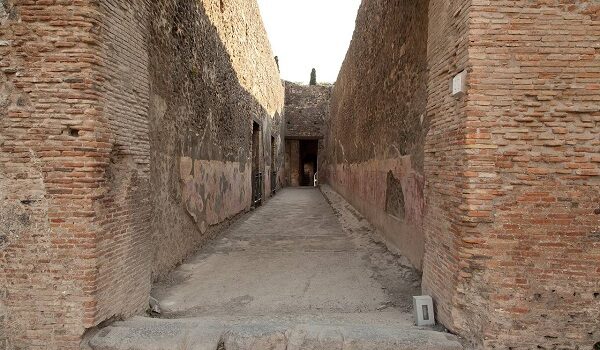
“Bruits de couloir”: Shedding New Light on Ancient Graffiti
The “Bruits de couloir” project offers a comprehensive reinterpretation of the graffiti in the theatre corridor in Pompeii through a multidisciplinary approach combining epigraphy, archaeology, philology and digital humanities. Two field campaigns (2022 and 2025) have enriched the published corpus (around 200 graffiti) with 79 previously unpublished inscriptions. The project aims to restore these inscriptions to their spatial context, revealing through graffiti thematic/spatial clusters, interactions, and multiple forms of sociability within a public space.
In this article, we detail our methodology, which includes the 1 Sorbonne Université, UFR de latin, UR 4081 Rome et ses Renaissances ; Institut Universitaire de France 2 Université du Québec à Montréal, Département d’Histoire 3 Sorbonne Université, UFR d’Histoire de l’Art et d’Archéologie, UR 4081 Rome et ses Renaissances use of a virtual grid, the documentation of spatial and thematic links between the inscriptions, and finally, full RTI coverage of both walls of the corridor.
 VAI ALL'ARTICOLO COMPLETO